
Talking bearishly about datacenters is about as cool as Ray Dalio hitting up Ibiza for his 77th birthday. Nonetheless, I’ve been repeatedly asked about datacenters and their recent involvement in increasing leverage through debt issuances, and whether the recent wave of equity raises causes any concern on our end, particularly given that many of these companies have recently turned free cash flow (FCF) negative.
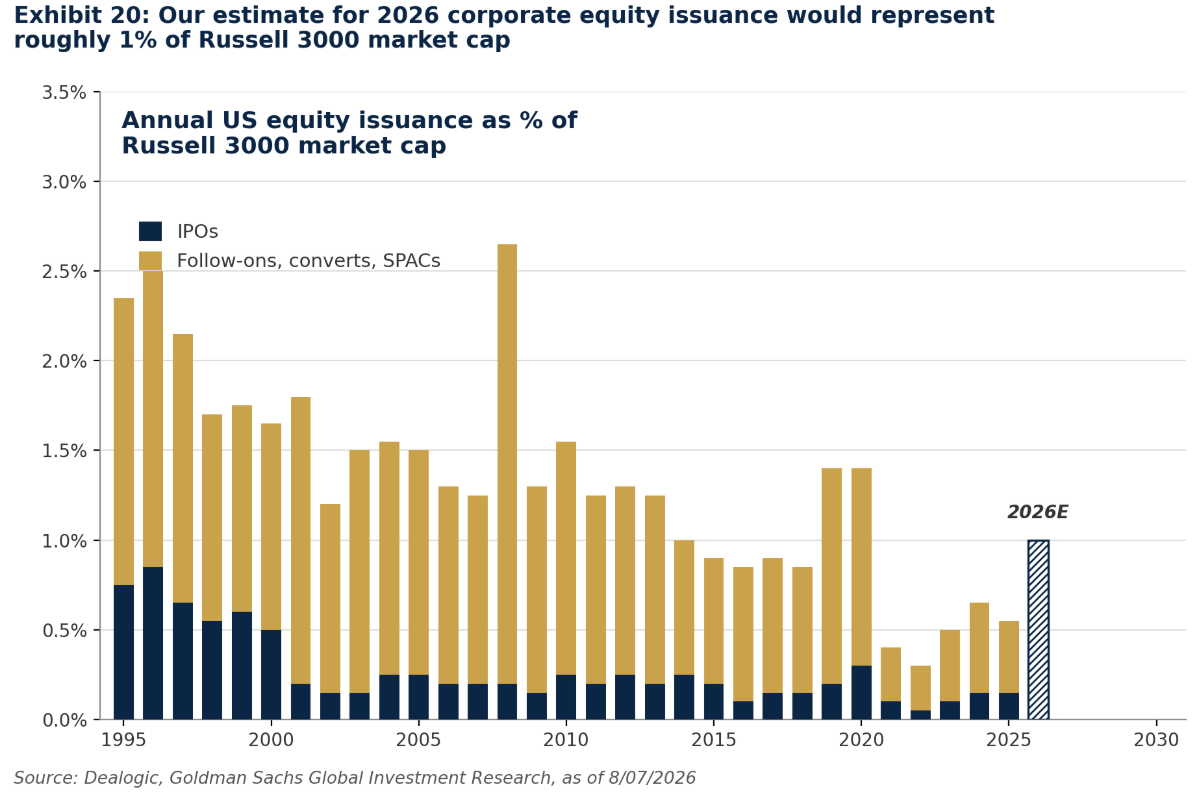
Some of this stems from broader capital markets activity: US corporates raised $252B of equity in Q2 through IPOs, follow-ons, converts, and SPACs, eclipsing the previous quarterly record of $234B set in Q1 2021. Against that backdrop, it’s worth stepping back to assess how datacenter operators are financing this buildout, and what that means for credit quality, dilution risk, and the sustainability of the current spending cycle.
Before I dive in, I want to make one point: While the absolute number is at record highs, on a relative basis, it is closer to the ballpark of average rather than a “boom”. Both the number of offerings and the volume of issuance scaled relative to equity market cap are tracking slightly below historical averages. But yes, issuance in 2026 has been highly concentrated; across IPOs and follow-ons, the three largest offerings have accounted for nearly half the total issuance volume YTD.
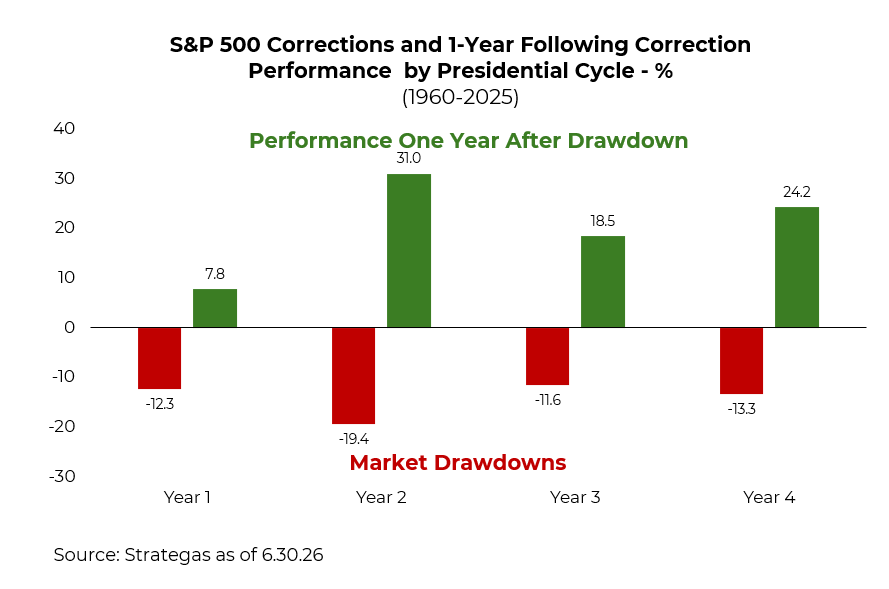
I’ll state this bluntly: I’m not worried about AI leverage right now, and I’ll show why below. However, what does worry me is the politicization of datacenters during a midterm election year. Datacenter moratoriums are the top emerging AI policy risk heading into the 2026 midterms, but not for the obvious reason. Most moratoriums just delay new projects rather than block them, and projects already under construction are largely unaffected. In my opinion, the real bottleneck isn’t political; it’s physical. The practical challenge is building and powering these facilities fast enough, spanning construction timelines, grid capacity, and bringing new generation online. So, the current risk here is more from a sentiment perspective, i.e., valuation.
Why now? Well, it’s midterms, and AI has become an affordability issue. Rising electricity bills are getting blamed on datacenters, and whether that’s technically fair matters less than the perception that households are subsidizing AI’s buildout. That’s why the debate has shifted, in part, from should AI be built to who pays for it.
This is a prime example of why midterm years tend to be more volatile than other years.
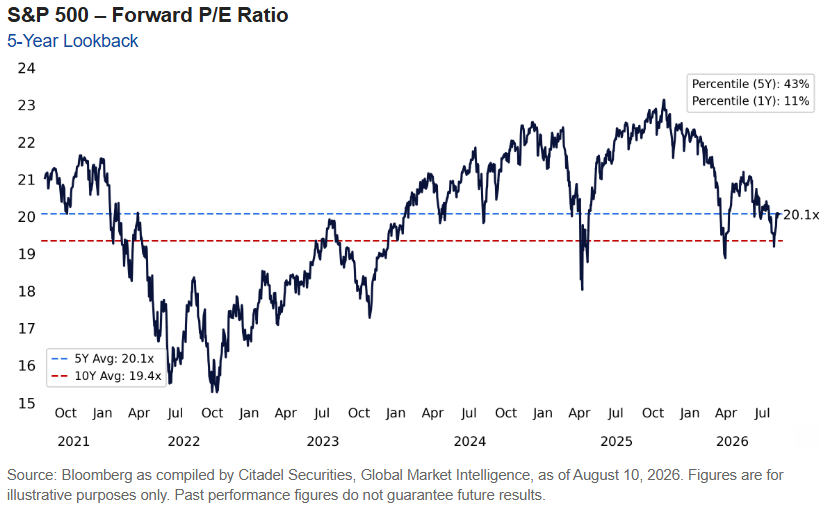
TLDR: I’m not worried about hyperscalers entering the debt and equity markets. The ramifications have been that the S&P 500’s valuation has cooled off a bit as the index has gotten more capex-heavy, with all this AI spending eating into free cash flow in the near term. That’s a shift from the last decade, when the market kept re-rating higher basically because free cash flow kept climbing and margins stayed fat.
But here’s the thing: If all this capex actually turns into real profitability down the line instead of just being a drag, we could see the index re-rate nicely higher from here. So yes, we’re pretty optimistic about where this goes if the spending pays off.
Leverage in the Cloud
Simply said, hyperscaler credit risk is likely overblown. AI-related issuance has accounted for about 40% of US equity follow-on volume this year. Health Care is typically the largest sector contributor, and that has remained the case this year. However, technology, media, and telecommunications (TMT) have accounted for nearly 30% of YTD follow-on volume, more than double the sector’s share of issuance during the past five years.
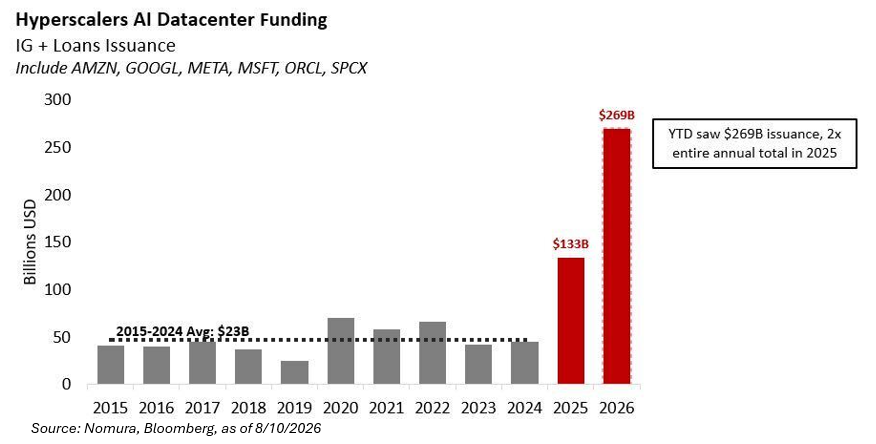
It’s no surprise that AI spending is likely to create bigger funding needs next year. How will they pay for it? Hyperscalers are expected to spend over $1T a year on capex through 2027, more than their operating cash flow can cover. Most investors we talk to think actual spending will run even higher, and that other companies will need outside capital too. Debt will likely cover most of this, but equity financing should keep playing a role as firms invest in AI while protecting their balance sheets. We were always told that capex spending will be a risk if these firms tap debt and equity markets; does that remain true?
This is why the market is pricing more default risk for hyperscalers than for investment-grade bonds:
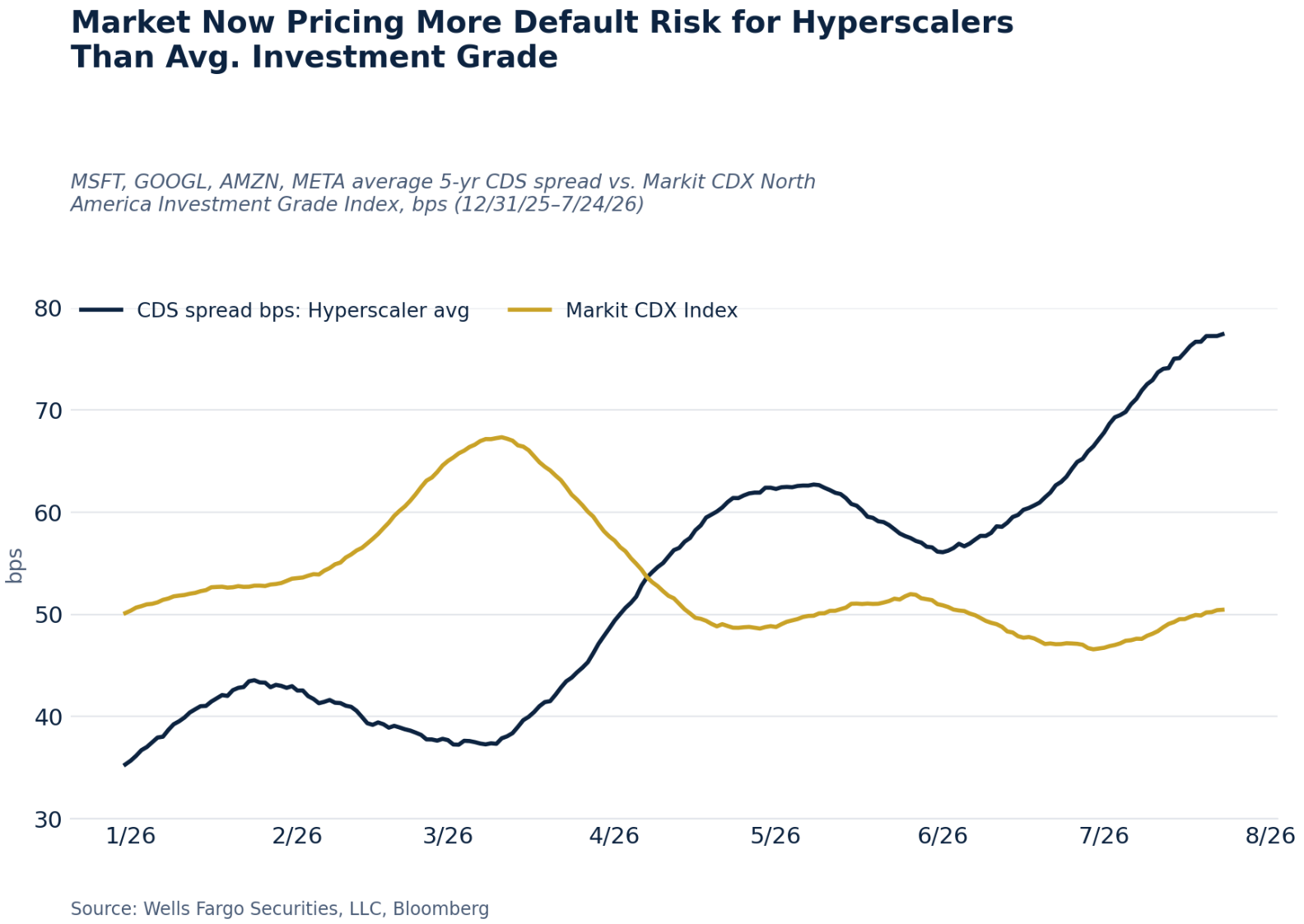
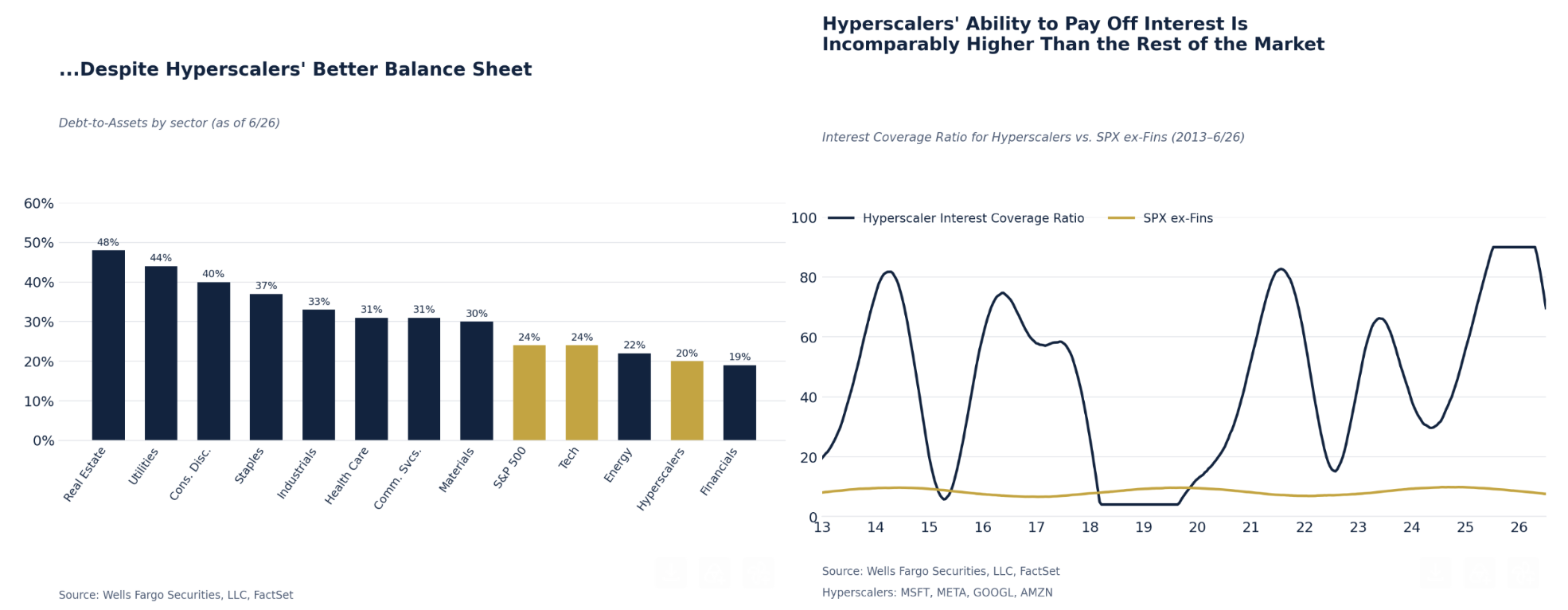
Remember, the market is a forward-looking mechanism. Even though free cash flow is negative for the Hyperscalers in ’26 and ’27, the market is somewhat ignoring this due to the expectation of operating cash flow inflecting in 2028. Goldman Sachs analysts expect hyperscalers to raise both debt and equity in 2027 to the tune of 35% of their capex spending.
Likely through debt, as hyperscalers tend to get quite favorable rates, and through equity, given that companies will issue equity if their shares are trading at heightened valuations, i.e., at a cheap equity currency.
In my opinion, the hyperscalers have room to add debt to their balance sheet, and this shouldn’t cause concern. The concern really boils down to whether they can get a return on that invested capital attractive enough to justify the spending, not how they’re funding it.
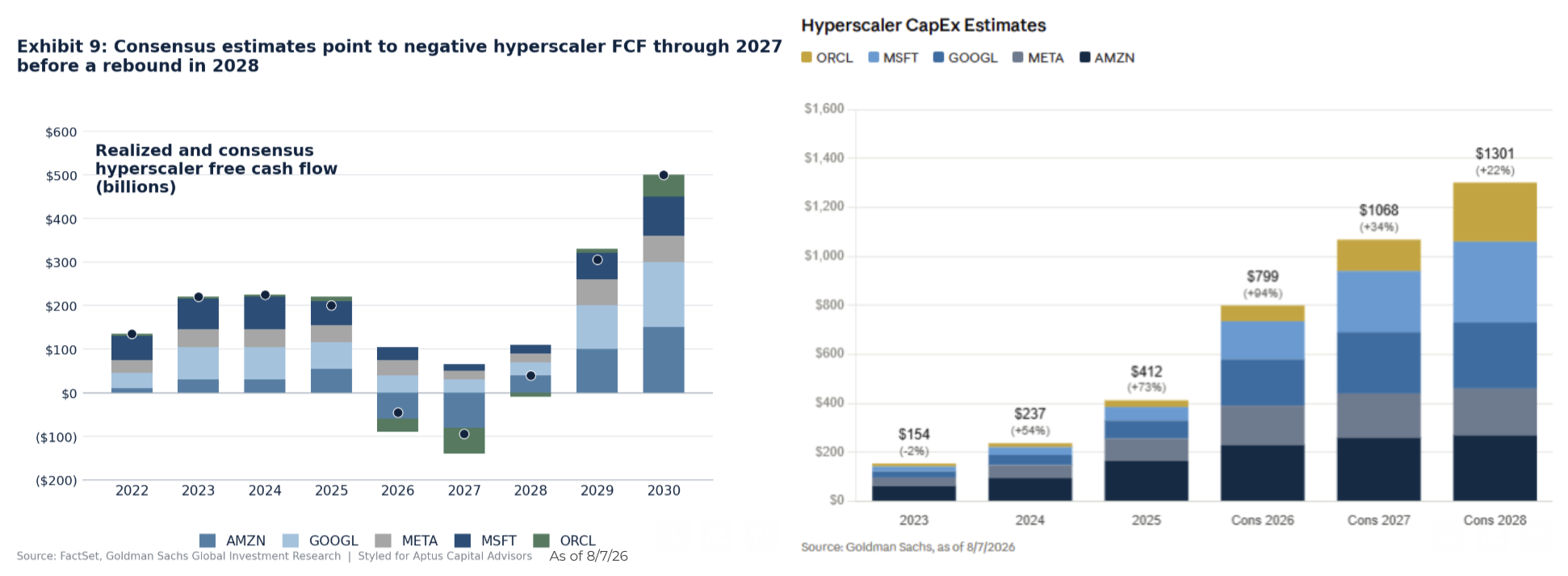
As you see, leverage among the hyperscalers doesn’t concern us much; their balance sheets are strong and their spending, while enormous, is well understood by the market. The bigger area of uncertainty sits in private credit, which is far harder to assess from the outside given their opaque structures. Private lenders have likely extended meaningful financing to riskier AI-adjacent companies, including many earlier-stage or less-established players, and that exposure is difficult to size with confidence. Personally, I don’t see the hyperscalers and the other AI-adjacent names on the same playing field, and they should be treated differently. Yet, we’re focusing more on the public market exposure than private market exposure.
My Takeaway: The S&P 500’s valuation has cooled off a bit as the index has gotten more capex-heavy, with all this AI spending eating into free cash flow in the near term. Again, that’s a shift from the last decade, when the market kept re-rating higher basically because free cash flow kept climbing and margins stayed fat.
Another reminder: If all this capex actually turns into real profitability down the line instead of just being a drag, we could see the index re-rate nicely higher from here. We’re pretty optimistic about where this goes if the spending pays off.
This is why, at Aptus, we focus our attention on a different style of alts exposure through owning volatility as an asset class. By doing this, we believe we can provide transparent and liquid exposure, while altering one’s asset allocation to attack longevity risk and drawdown risk. Typical private markets tend not to have any of those benefits.
Hit us up to learn more.
Disclosures
Past performance is not indicative of future results. This material is not financial advice or an offer to sell any product. The information contained herein should not be considered a recommendation to purchase or sell any particular security. Forward looking statements cannot be guaranteed.
This commentary offers generalized research, not personalized investment advice. It is for informational purposes only and does not constitute a complete description of our investment services or performance. Nothing in this commentary should be interpreted to state or imply that past results are an indication of future investment returns. All investments involve risk and unless otherwise stated, are not guaranteed. Be sure to consult with an investment & tax professional before implementing any investment strategy. Investing involves risk. Principal loss is possible.
Advisory services are offered through Aptus Capital Advisors, LLC, a Registered Investment Adviser registered with the Securities and Exchange Commission. Registration does not imply a certain level of skill or training. More information about the advisor, its investment strategies and objectives, is included in the firm’s Form ADV Part 2, which can be obtained, at no charge, by calling (251) 517-7198. Aptus Capital Advisors, LLC is headquartered in Fairhope, Alabama. ACA-2608-12.